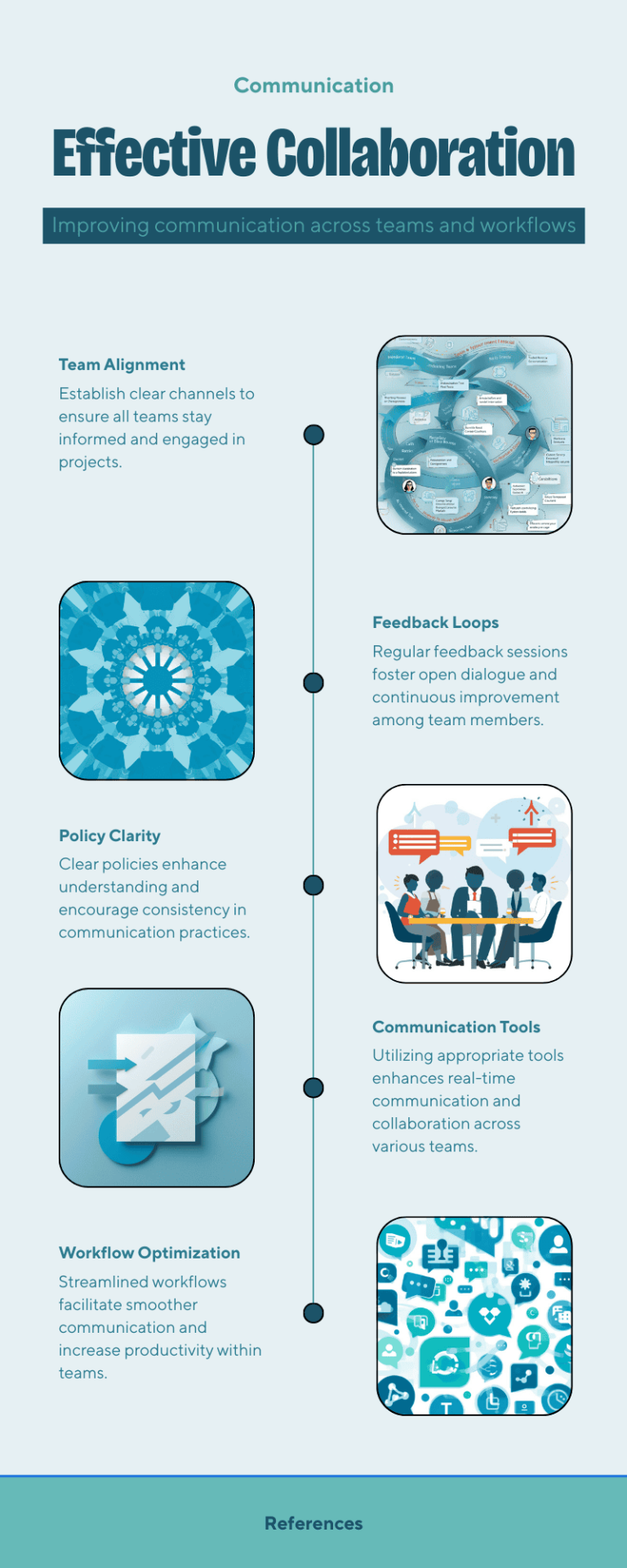




Quick Answer: To make communication effective across teams, organizations need three things: a shared writing strategy, reader-centered documents, and consistent standards. Communication breaks down not because people lack effort, but because messages lack structure, purpose, and alignment. When teams write with a defined outcome in mind and policies are designed around real decisions rather than legal coverage, alignment improves, rework decreases, and workflows run more predictably.
Organizations often assume that communication failure problems stem from people not trying hard enough. In reality, the issue is usually structural. When communication lacks clarity, purpose, and alignment, even the most capable professionals struggle to produce consistent results.
Across teams, policies, and everyday workflows, effective communication is what turns knowledge into action. It helps employees understand not just what they are doing, but why it matters and how their work fits into the bigger picture. When communication is intentional and structured, organizations save time, reduce errors, and build trust across roles and departments.
Why Does Effective Communication Break Down in Most Organizations?
Many organizations believe they communicate well because information is shared frequently. Meetings are held, emails are sent, and documents are created. Yet confusion persists. This happens because communication volume is not the same as communication effectiveness. When messages are unclear, overly complex, or disconnected from how people actually work, information becomes noise.
One common breakdown occurs when teams communicate without a shared understanding of purpose. Messages are written without defining what outcome they are meant to achieve. As a result, readers are left to interpret priorities on their own.
Another issue arises when communication is created in silos. Each department develops its own language, assumptions, and expectations, making cross-team collaboration difficult.
Policies also contribute to communication breakdowns when they are written to cover every possible scenario instead of guiding real-world decisions. When policies are dense, abstract, or poorly organized, employees either misinterpret them or avoid them entirely. Over time, this erodes confidence in written guidance and increases reliance on informal workarounds.
How to Build Effective Communication Across Cross-Functional Teams
Effective writing services across teams start with recognizing that different groups use information differently. Engineers, managers, compliance professionals, and frontline staff all approach documents with distinct goals. Writing that works for one group may confuse another if it is not designed with the reader in mind.
To communicate effectively across teams, organizations must focus on reader awareness. This means understanding what each audience needs to know, what they already understand, and what decisions they are expected to make. Communication should be structured to guide readers quickly to the information that matters most to them.
Consistency also plays a critical role. When teams use different formats, terminology, or levels of detail, collaboration slows down. Establishing shared communication standards helps ensure that documents feel familiar and usable, regardless of who writes them. This does not mean forcing everyone into rigid templates. It means aligning on principles such as clarity, logical organization, and purpose-driven writing.
When teams communicate using a shared strategy, effective communication becomes repeatable rather than accidental. Projects move faster, handoffs are smoother, and fewer clarifying conversations are needed to keep work on track.
How to Use Effective Communication to Make Workplace Policies Actually Work
Policies are only effective if people can understand and apply them. Too often, policy documents are written to protect the organization rather than support the reader. While accuracy and compliance matter, policies that are difficult to read or navigate fail to serve their purpose.
Effective corporate writing training in policies begins with clear intent. Every policy should answer a simple question for the reader: What am I expected to do in this situation? When policies are structured around real decisions and actions, they become tools rather than obstacles.
Language choice is equally important. Policies written in overly formal or legalistic language create distance between the document and the user. Clear, direct wording builds confidence and reduces the risk of misinterpretation. Effective communication does not oversimplify important rules, but it does present them in a way that respects the reader’s time and responsibilities.
Organization is another key factor. Policies should follow a logical flow that mirrors how users search for information. When readers can quickly locate relevant sections and understand how different rules connect, compliance improves naturally. Effective communication turns policies into living documents that guide behavior instead of static files that are rarely consulted.
How Effective Communication Strengthens Daily Workflows and Reduces Rework
Daily workflows rely on communication more than any other aspect of work. Instructions, updates, handoffs, and decisions all depend on information being shared clearly and at the right time. When communication breaks down, small issues compound into delays, rework, and frustration.
Effective communication within workflows focuses on clarity and timing. Employees need to know what to do, when to do it, and how success is measured. Vague instructions or last-minute changes disrupt momentum and increase the likelihood of mistakes. Clear documentation and consistent messaging help teams operate with confidence and independence.
Corporate writing training also benefits from standardization. When recurring tasks are supported by well-written procedures or guidelines, teams spend less time reinventing solutions. This allows employees to focus on problem-solving and improvement rather than clarification. Effective communication creates predictable processes that reduce cognitive load and support productivity.
Just as important is feedback. Workflows improve when communication flows in both directions. When teams can share what is working and what is not, organizations can refine their processes and documentation. Effective communication encourages collaboration rather than compliance alone.
What Role Does Strategy Play in Effective Workplace Communication?
At the core of effective communication is strategy. Writing without a plan often leads to documents that are technically correct but practically useless. Strategic communication starts by defining purpose, understanding the reader, identifying the desired outcome, and choosing the right approach to achieve it.
When organizations teach employees how to plan communication before writing, the quality of documents improves significantly. Writers become more intentional, and readers experience less confusion. This strategic approach applies equally to emails, reports, policies, and training materials.
Effective communication is not about writing more. It is about writing with intention. When strategy guides communication, documents become clearer, shorter, and more actionable. Teams spend less time revising and more time executing.
How to Build an Organizational Culture That Sustains Effective Communication
Sustainable improvement requires more than individual skill building. Organizations must create a culture that values clear communication. This includes setting expectations, providing training, and establishing review processes that focus on clarity and usefulness rather than personal preferences.
Leaders play a critical role by modeling effective communication themselves. When leaders write clearly, ask purposeful questions, and prioritize reader needs, these behaviors spread throughout the organization. Over time, effective communication becomes part of how work is done rather than an extra effort.
Training also matters. Most professionals are never taught how to communicate strategically at work. They rely on habits formed in school or on the job, which may not align with organizational needs. Targeted training helps teams develop shared language and practical tools they can apply immediately.
Start Improving Effective Communication Across Your Organization Today
Effective communication across teams, policies, and daily workflows is not a soft skill. It is a core operational capability. Organizations that invest in improving how they communicate see measurable benefits in efficiency, accuracy, and employee engagement.
By focusing on clarity, strategy, and reader-centered writing, organizations can transform communication from a source of friction into a competitive advantage. Effective communication makes work easier, decisions clearer, and outcomes stronger. It is not about saying more. It is about saying what matters in a way that works.
Frequently Asked Questions
What is effective communication in the workplace?
Effective communication in the workplace means sharing information with a clear purpose, in a format the audience can act on. It goes beyond sending messages frequently. It requires understanding your reader, organizing content logically, and writing with a specific outcome in mind rather than simply transferring information.
Why does communication break down across teams?
Communication breaks down across teams when messages lack shared purpose, each department uses different language and assumptions, and documents are created without a defined reader in mind. Volume is not the problem. Most organizations share information constantly. The issue is that information is not structured to support the decisions teams need to make.
How do you improve communication between departments?
Improving cross-departmental communication starts with establishing shared standards for how information is structured and presented. When teams align on format, terminology, and purpose-driven writing, collaboration becomes faster and less dependent on clarifying conversations. Training and leadership modeling reinforce these standards across the organization over time.
What role does writing play in effective workplace communication?
Writing is the primary vehicle for workplace communication, covering everything from emails and policies to reports and procedures. When writing is clear and purposeful, it reduces misunderstandings and speeds up decisions. Poor writing creates friction at every level of an organization, including delayed approvals, misapplied policies, and repeated requests for clarification.
How can organizations build a culture of effective communication?
Organizations build a communication culture by setting clear expectations, providing targeted writing training, and having leaders model the behaviors they want to see. When leaders write clearly and prioritize reader needs, those habits spread. Training gives employees the practical tools to apply consistent communication strategies across all types of documents and messages.